
Voice cloning software deserves a careful audition before it becomes part of your publishing process. A short sample may sound convincing while still stumbling over a product name, changing emphasis, or becoming tiring across a longer passage. Evaluate the voice against the narration you actually need to deliver.
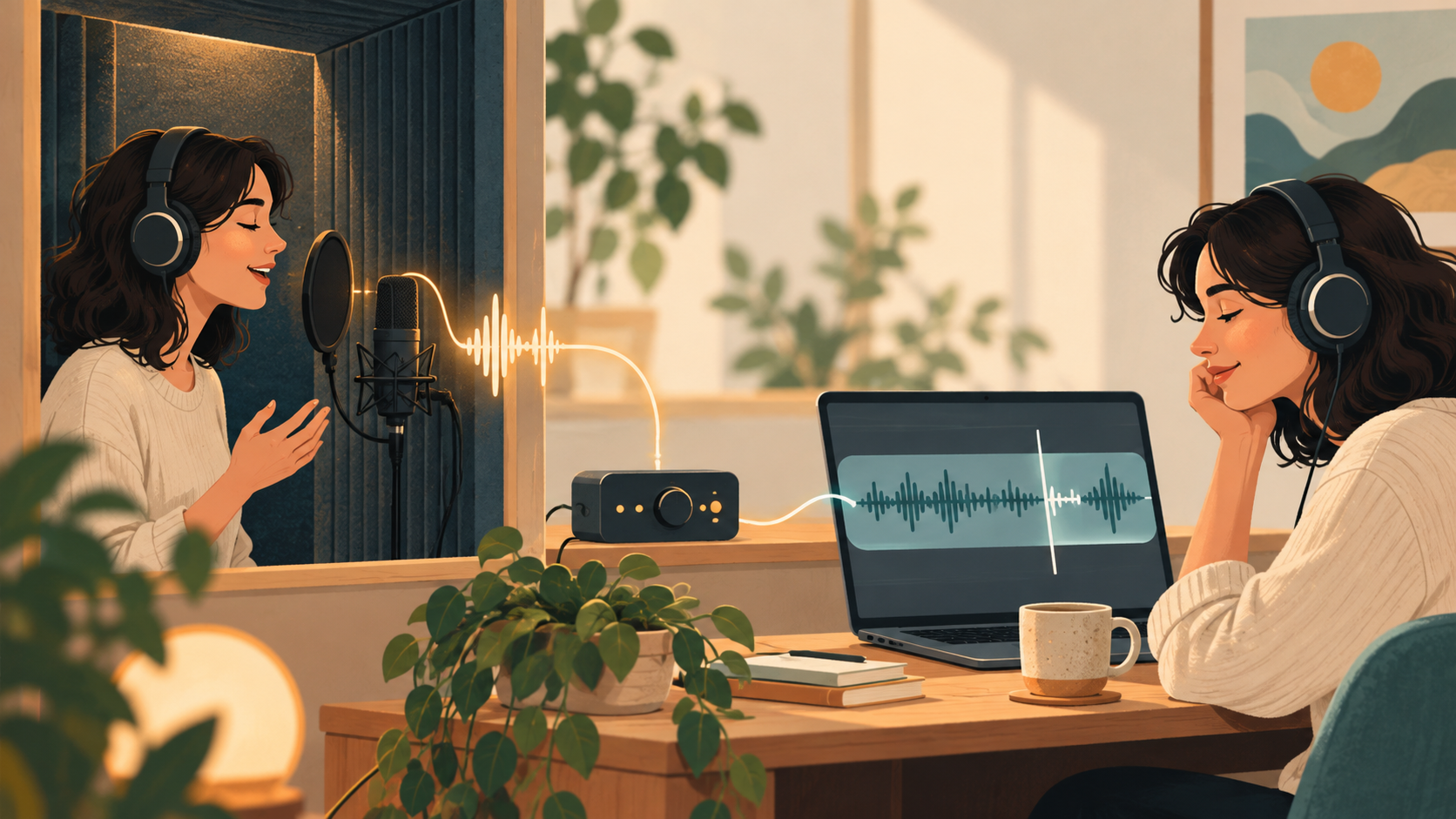
This guide focuses on creating narration from your own voice or another voice you have permission to use. It provides selection criteria and a proposed review workflow, not a hands-on ranking or a promise of a particular level of realism.
Choose voice cloning software around the finished recording
Define the deliverable before comparing tools. An internal training clip, a product walkthrough, and an audiobook passage place different demands on a voice. For each, write down the language, intended audience, expected duration, pronunciation requirements, and how often the script will change.
For a product demonstration, the difficult part may be repeating unusual feature names consistently. For a personal essay, pauses and emphasis may matter more. A voice sample that works for a cheerful introduction does not establish that the same setup will handle a technical explanation.
Decide how much editing you can tolerate. A tool that needs several retries for each unfamiliar word may still suit an occasional clip. It may be less suitable for a team publishing a frequently updated course. Treat revision effort as a real selection criterion even when the generated audio initially impresses you.
Compare voice cloning software controls against your script
ElevenLabs describes instant and professional voice cloning, with generated speech based on uploaded voice samples. It is a candidate for evaluating AI voice cloning for narration. Confirm its current recording requirements, verification process, and plan eligibility directly before uploading material.
Compare other voice cloning software using the same questions. Can you correct pronunciation without rewriting every sentence? Can you replace a short passage while keeping surrounding narration consistent? Can you review and export audio in a format your editor accepts? Verify each capability instead of assuming that a general text-to-speech feature includes it.
The site's ElevenLabs listing can help you start a shortlist. Keep the final decision tied to your script, account access, and current provider information rather than to a universal claim that one voice tool is best.
Record a voice sample that represents the source
Use clear recordings of the intended speaker in an environment suitable for speech. Follow the provider's current instructions for recording length, file format, and processing. Do not combine unrelated clips merely to reach a duration requirement; background noise and changing recording conditions can make a sample harder to evaluate.
Keep the original files. Record the microphone and room used, and note whether the source has already been heavily processed. Those notes help explain differences between later trials without pretending the output is caused only by the voice model.
If you use another person's voice, establish permission for the specific project and intended distribution. Do not assume possession of an audio file establishes permission to clone the speaker. Check the provider's own consent and verification rules as part of choosing the service.
Audition pronunciation, pacing, and revisions
Prepare a small script with ordinary sentences, a difficult name, a number read in context, and a paragraph that requires a natural pause. Add a sentence from the real project rather than relying only on a generic demonstration. Keep the script unchanged while comparing candidates.
Listen once for meaning and again for delivery. On the first pass, check whether the spoken words match the script. On the second, listen for strained transitions, unexpected stress, inconsistent volume, or a change in vocal character. Record the exact passage that needs attention.
Then revise one sentence and regenerate the affected section. The narration workflow should handle corrections without forcing you to rebuild the entire recording. Compare the replacement with the sentences before and after it. A locally acceptable sentence can still sound out of place in the sequence.
Evaluate cost and control beyond the first demo
Check current usage limits and how the provider counts generated or regenerated audio. A trial that fits within an allowance does not tell you what a month of script revisions will cost. Estimate your own production needs from planned content and likely correction passes; label that calculation as a planning estimate.
Ask how you can delete the voice sample and generated assets, and who inside the account can use the voice. If the tool will serve a team, test the intended permissions before treating it as a shared production resource. This guide does not assert that every plan offers identical controls.
Keep a human approval step before publication. The speaker or an authorized reviewer should hear the final audio in context, especially when the script makes claims on the speaker's behalf. Follow the disclosure requirements applicable to the project and platform; do not use a cloned voice to misrepresent someone else's endorsement.
FAQ
Is a convincing short demo enough to choose a tool?
No. Test the actual vocabulary, a longer passage, and a small revision. Those checks expose different problems from a single introductory sentence.
Should a voice sample include background music?
Follow the provider's recording guidance. For an evaluation, a clear speech source is easier to inspect and compare than one mixed with unrelated sound.
Does every text-to-speech tool support cloning?
No. Check whether the service supports a personal voice, what verification it requires, and whether your account can access that feature.
Conclusion
Choose voice cloning software by the narration you can approve and revise, not only by the first demo. Prepare a representative script, preserve the source recordings, and check the final audio with the authorized speaker before publishing.